We use necessary cookies to make our site work. We'd also like to set analytics cookies that help us make improvements by measuring how you use the site. These will be set only if you accept. For more detailed information about the cookies we use, see our Privacy Notice for more information.
Introducing Konfir’s Affordability Waterfall: a single journey that checks income sources in sequence and stops once affordability is met, reducing fragmented workflows and manual follow-up.
WRITTEN BY
Tom McAuliffe
PUblished ON
April 16, 2026
While Open Banking can often provide a quick way to identify income, it’s not always sufficient on its own. In many cases, organisations still need to rely on additional sources such as payroll data, HMRC records, or supporting documents before they can confirm whether an applicant meets their affordability requirements.
This is where many affordability workflows become complicated. Each verification method tends to operate independently, and when one source cannot confirm income the process moves to another source with a separate workflow. Applicants may be asked to provide additional information, operations teams may need to review transaction data manually, and different vendors may be triggered at different points in the journey. Over time this creates a series of fallback processes rather than a single verification flow.
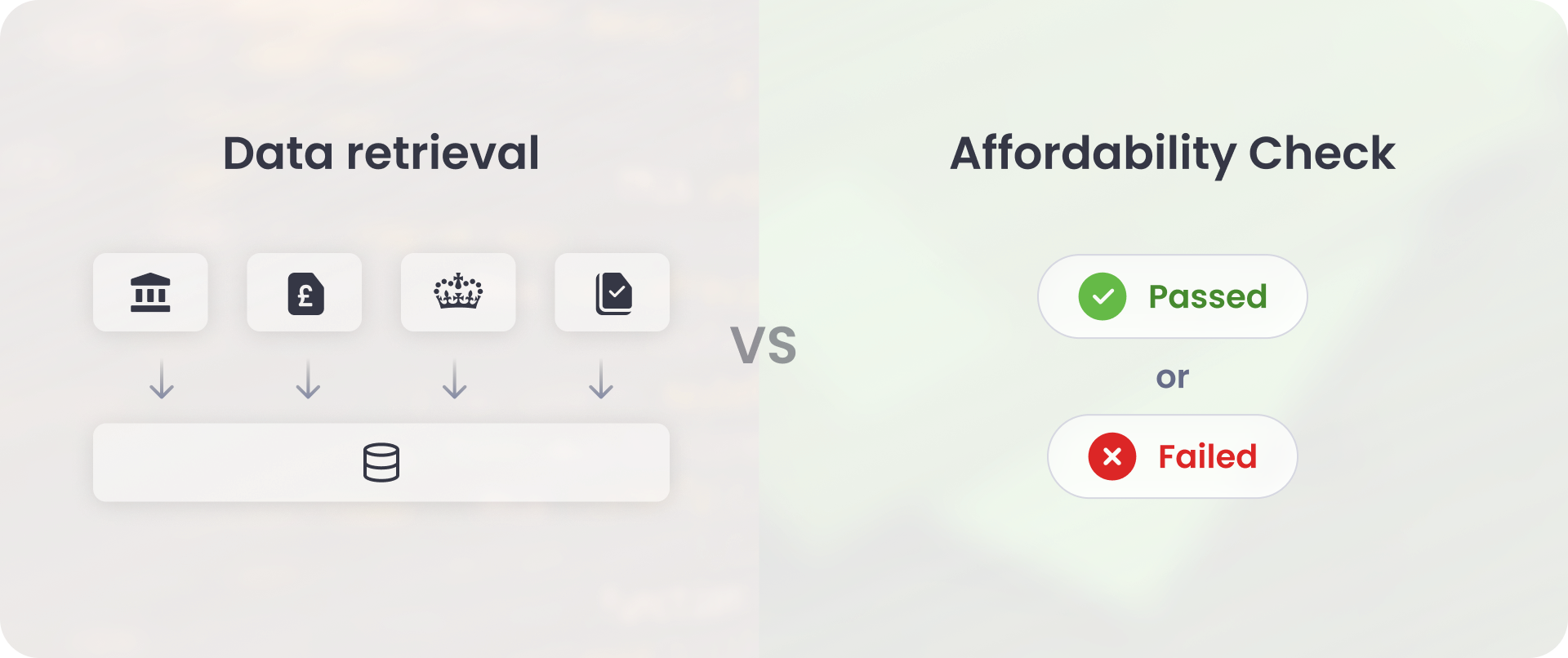
The core issue is that most verification tools are designed around retrieving data from a particular source rather than answering the affordability question directly. A source may successfully return data but still leave the organisation uncertain about whether the applicant meets the required income threshold. When this happens, additional verification steps are required even though the system technically succeeded in retrieving information.
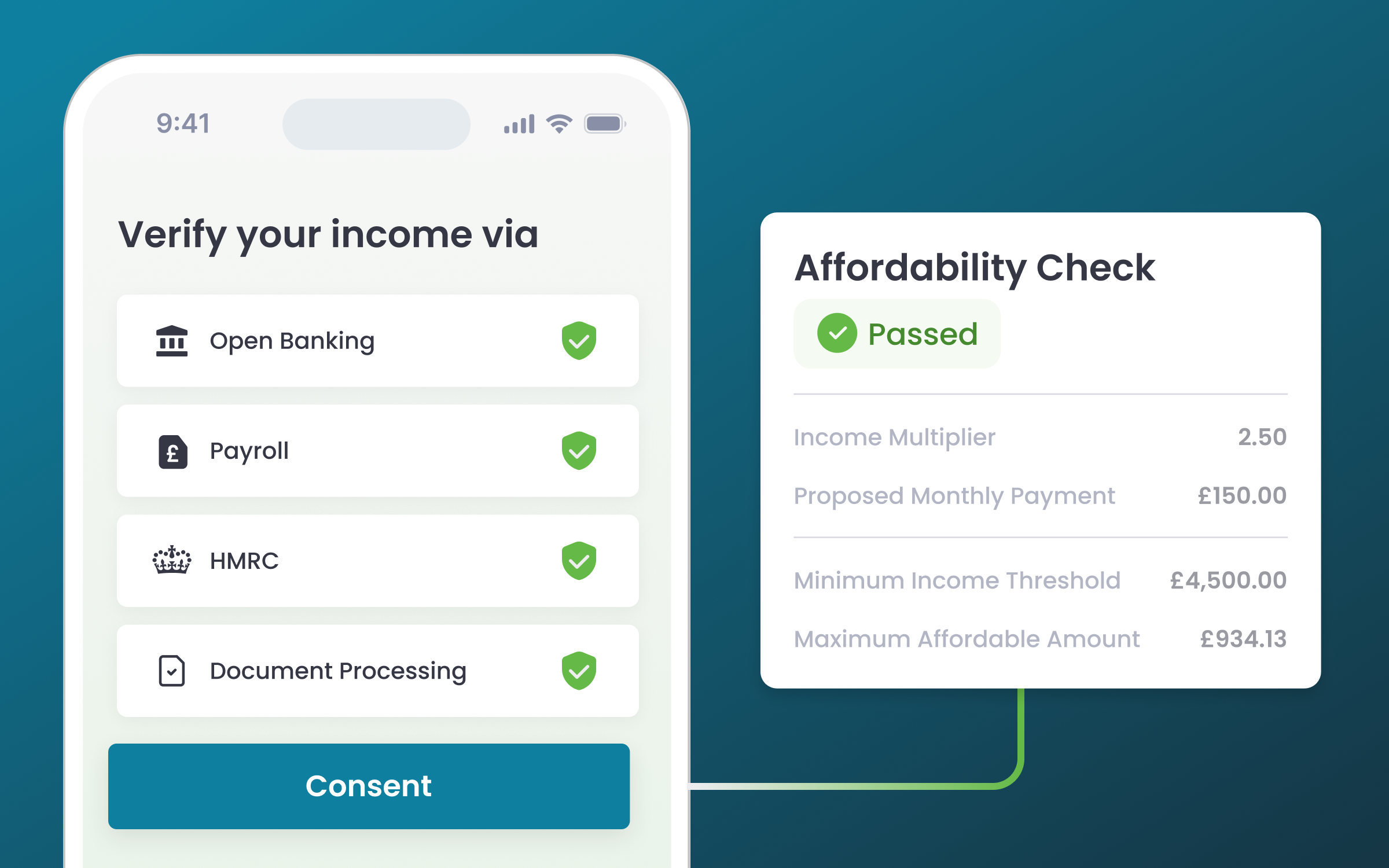
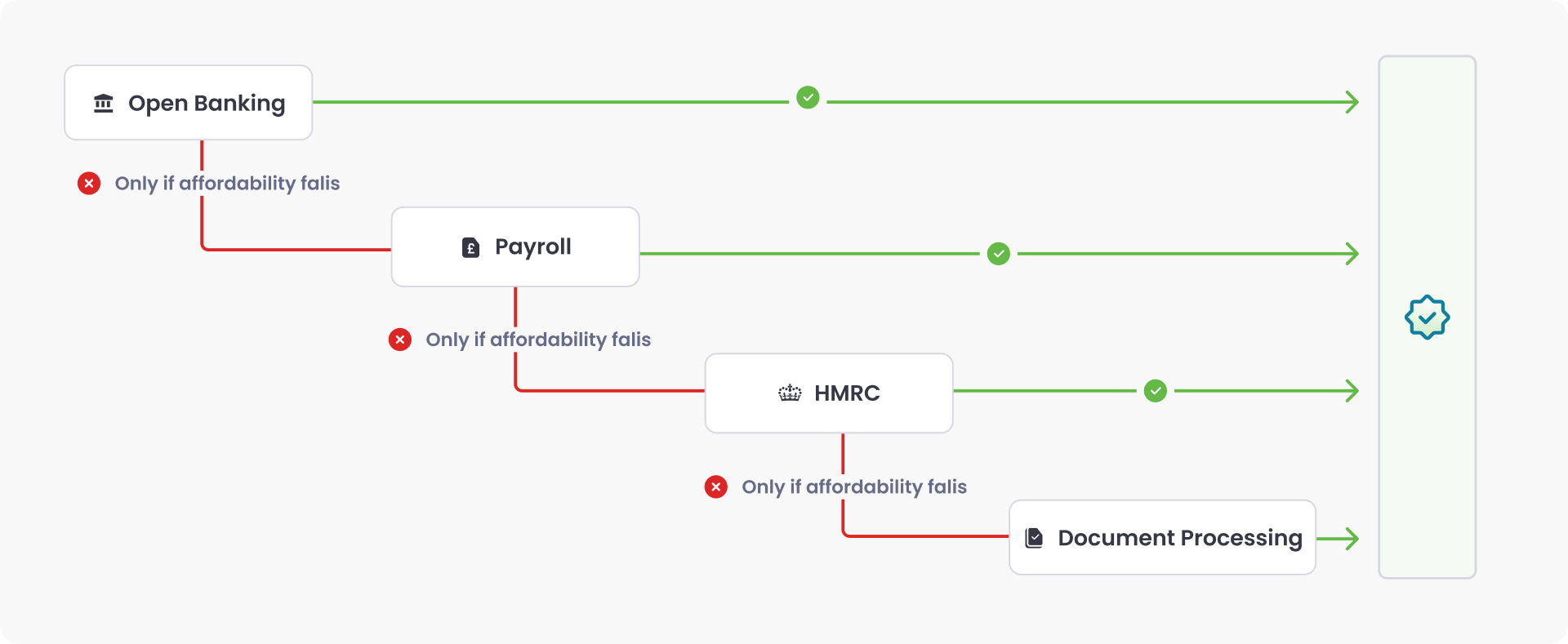
Konfir’s Affordability Waterfall takes a different approach. Instead of focusing on individual data sources, it focuses on the affordability outcome. Organisations define the income threshold they need to verify, and Konfir evaluates available income sources in sequence to determine whether that threshold has been met.
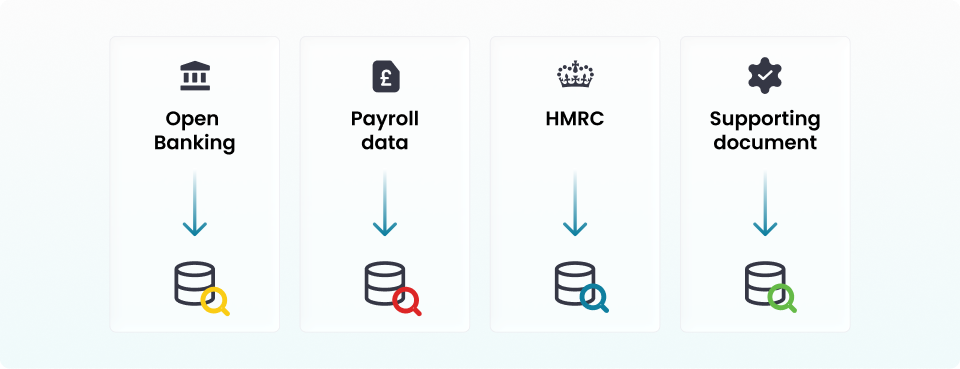
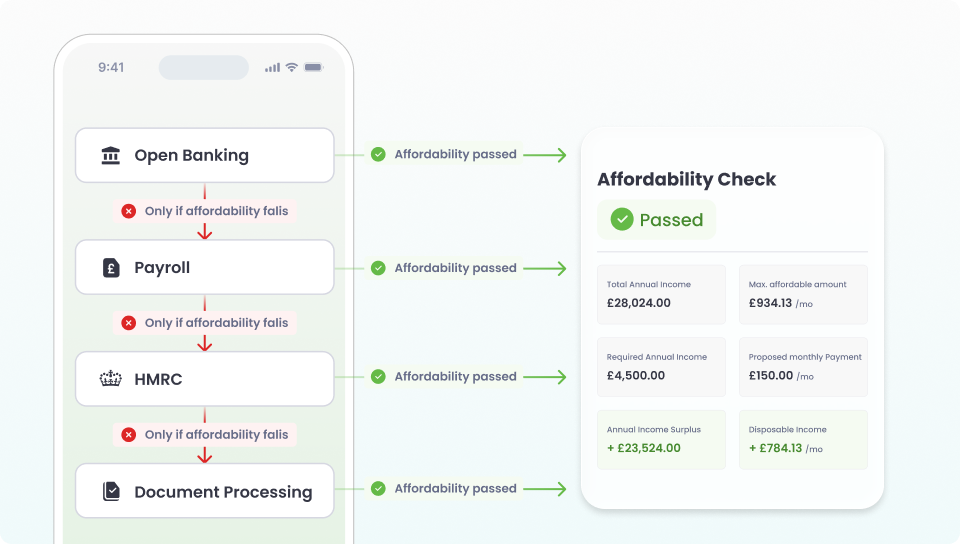
The process begins with Open Banking. If transaction data contains income signals that meet the required threshold, affordability can be confirmed immediately and the journey ends there. If the threshold is not met or the available data is insufficient, the process continues to the next source. Payroll data is then evaluated, followed by HMRC records, and additional document processing where required. The sequence continues until the threshold is met or no further sources are available.
This approach removes the need for separate fallback workflows because the sequencing is handled within a single verification process. Each source is evaluated against the same affordability requirement, and the journey stops as soon as the requirement is satisfied.
The result is a clearer outcome for the organisation running the check. Instead of receiving data from multiple sources and interpreting it manually, the system confirms whether the verified income meets the threshold that was defined at the start of the process. The response includes the source that confirmed the result, the verified income used in the calculation, and the difference between the verified income and the threshold.
Another advantage of this model is consistency. Because income from Open Banking, payroll, HMRC, and other sources is returned using the same data model, organisations can integrate the verification process once and apply it across different income sources without building separate logic for each method.
In practice this means that affordability verification becomes a single structured process rather than a collection of disconnected checks. Applicants can move through the journey within the same application flow, and organisations receive a clear affordability result rather than a series of partial signals that require interpretation.

.png)
.png)